-
Energy
Energy savings, reduction of energy consumption, increase in energy efficiency, and overall reduction of the carbon footprint and environmental burden at UP are monitored. Primarily, this involves electricity, heat, and gas consumption. In order to meet these objectives, a baseline analysis and energy audit will be carried out as a basis for the implementation of energy efficiency measures.
SMART measurement and control tools, sensors, smart metering, and other measures will be introduced to make energy management at UP more efficient. In the case of repairs and adjustments, renovations and new buildings, measures resulting from the energy audit will be respected and will be complemented by consultations with experts on the use of appropriate tools to reduce energy consumption.
-
Waste and the Circular Economy
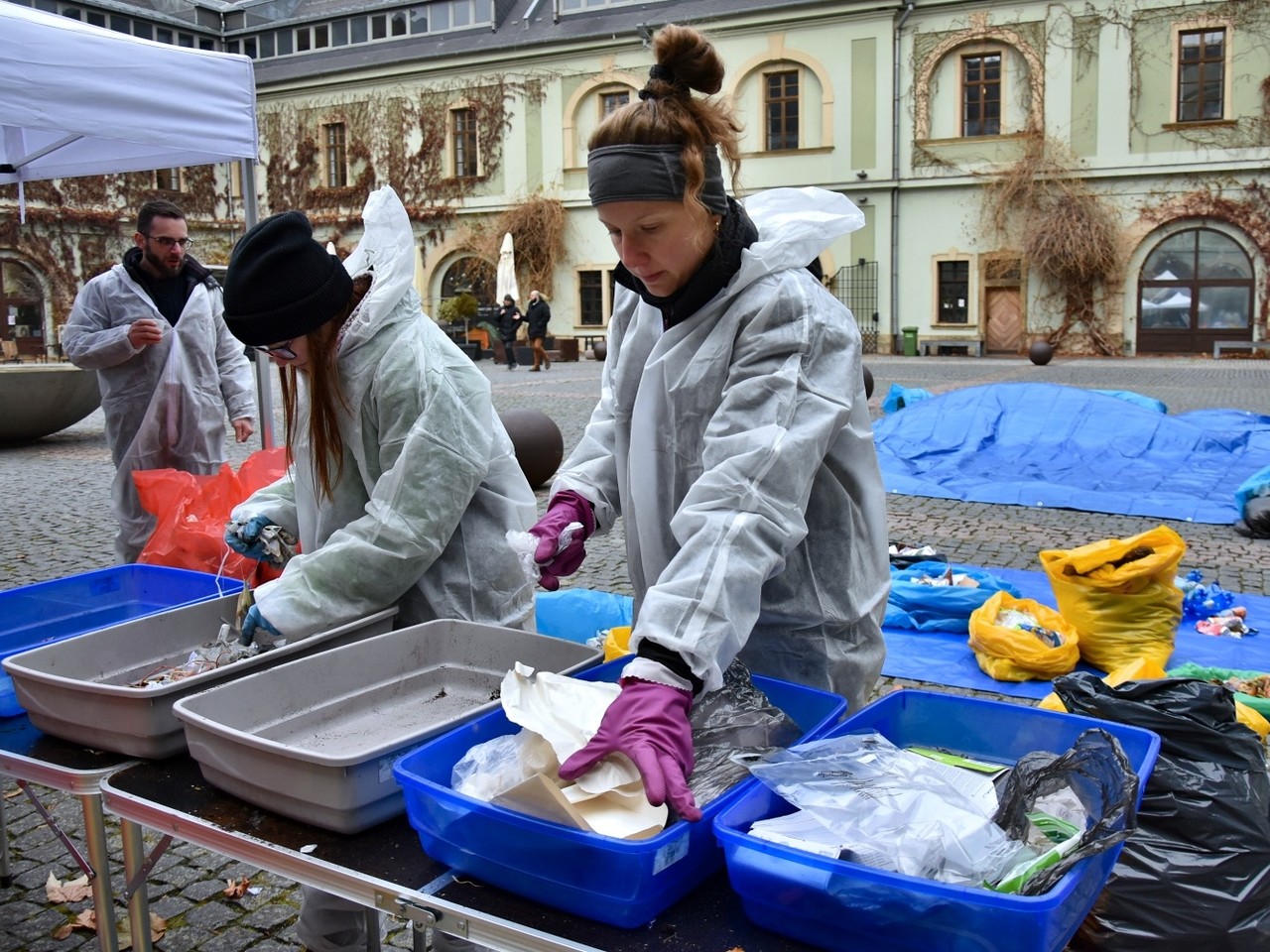
The main objective is to minimise waste. If waste cannot be prevented, the priority is to prepare waste for reuse, recycling, and other recovery (e.g. energy recovery), with waste disposal being the last resort. A waste analysis will be carried out, on the basis of which measures for improving waste management at UP will be proposed.
On the basis of a mixed municipal waste analysis, the waste infrastructure will be improved (more bins and containers for sorted waste will be installed) in an effort to reduce the proportion of mixed municipal waste and increase the proportion of sorted waste. In this regard, the use of disposables (cups, cutlery, plates, etc.) will be reduced at UP. The cleaning staff has been trained; the same training is being prepared for the entire UP community to raise awareness and improve knowledge in waste segregation.
Appropriate management of bio-waste is also being addressed in cooperation with the Olomouc Region. A web-based platform will be created for sharing items that are no longer used (such as furniture, instruments, and devices) among faculties and their staff.
-
Water and Greenery
The objective is to manage water sustainably at UP and to maximise the proportion of green space within the protection and development of biodiversity. A water audit will be prepared to support the current trend of reducing water consumption at UP. Also, plant passports will be issued for all greenery at all UP premises and estates, and a methodology summarising how to work with greenery and develop biodiversity will be developed.
-
Facilities and Infrastructure
Modern, environmentally sustainable buildings are also a good solution from an economic point of view, as they are more financially viable in the long term. The environmentally responsible construction and renovation of UP buildings will be pursued, in close accordance with priorities of the UP Sustainable Development Strategy as described above. An inventory of recommended rules for responsible public procurement (hereafter referred to as RPP) has been developed, and the Sustainable University Unit will be informed of planned purchases of technology, new equipment, and appliances.
The plan is to introduce Building Information Management (BIM, an intelligent process for creating and managing projects, based on a digital model) and to develop a methodology to convert all information on buildings and infrastructure into digital form. This sharing will avoid unjustified purchases, especially of scientific instrument infrastructure.
-
Information Technology and Digitisation
Digitisation contributes not only to sustainability but also to saving time and making the whole process of administration more efficient. The aim is to computerise all UP administration except for legally mandated hard copy documentation. Furthermore, UP will no longer require the submission of all final theses of students in hard copy. The publication of e-books and other teaching materials in electronic form, as well as e-learning, will be encouraged. The aim is also to reduce the overall amount of physical travel and, where the situation permits, to use virtual mobility through modern videoconferencing technology.
-
Dining
The aim is to provide a healthy and balanced diet in UP dining halls, which will have a positive impact not only on the individual but also on the environment. Preference for regional food suppliers and reduction of waste in food transport and food preparation are important. Solutions will be actively sought for the use of bio-waste and food waste.
Awareness-raising is also an integral part of this aim. Information leaflets are being prepared for UP dining halls to motivate diners not to waste food. Reusable cups will be actively promoted in FreshUP bistros. Drinking fountains and other forms of available drinking water will be provided in all faculties to partially avoid waste from single-use plastic packaging.
-
Mobility and Transport
In order to reduce the carbon footprint, it is vital to encourage UP students and staff who commute (or generally travel) by car to use a more sustainable mode of mobility, i.e. walking, cycling, and public transport. A questionnaire survey has been conducted to describe the current needs and preferences with regard to mobility at UP, and based on this survey, solutions will be proposed to facilitate a more sustainable form of mobility for students and employees. These include secure bicycle parking spaces, establishing cooperation with bike-sharing service providers, and negotiations with the Olomouc City Transport Company (DPMO).
-
Responsible Purchasing
UP is obliged to comply with the principles of socially and environmentally responsible public procurement. In particular, the following aspects are considered: decent working conditions, respect for social and labour rights, equal opportunities, consideration of sustainable development criteria including environmental impact issues, the supplier/product ecological footprint, business ethics, etc.
An analysis of the current situation shall be made, on the basis of which a list of recommendatory rules for RPP will be drawn up. Purchasing of UP advertising and promotional items will be standardised with a focus on both quality and local origin and production of sustainable materials across UP. A methodology will be developed for this purpose.
-
Education for Sustainability
Every UP student and employee, as well as the university as a whole, can contribute to positive global development through their actions at the local level. Critical thinking, and especially education, as the main pillar and mission of UP, are integral to this.
The goal is to implement sustainable development in the curricula and to create elective courses related to sustainability. Public lectures with experts on the topic will be organised at regular intervals. Students will be actively involved in organising campaigns on food waste, healthy and waste-free lifestyles, and so on.
-
Creative Activities for Sustainable Development
It will be important to make an analysis and plan for the development of UP’s educational and creative activities related to sustainability and the Sustainable Development Goals (SDGs). Theses subjects related to sustainability will be supported in departments close to the topic. As an encouragement, a Rector’s Award for Sustainability will be created for theses that are related to the SDGs.
In the UPoint UP information centre and shop, regular updating of existing products and selection of new ones will ensure that high quality, the use of sustainable materials, local origin and production are maintained. The proportion of sustainable products in the overall offer will be gradually increased.
-
Community for Sustainability
The aim is to build a community of UP academics, staff, and students who are actively interested in sustainability issues in various fields and will work closely with the Sustainability Coordinator on projects, campaigns, and research. This community made up of experts and lay people who want to participate in sustainability efforts at UP will be thus available when the need arises for expertise, opinions, and assistance in organising events.
-
Healthy Lifestyles and Community Care
Changing our eating habits, sleeping rhythms, physical activities, and certain environments will positively affect our health and thus reduce the risk of being overweight, developing type 2 diabetes, or suffering from depression and stress. The aim is to motivate UP students and staff to reduce sedentary lifestyles and encourage regular physical activity. UP will actively create a welcoming and motivating environment.
Collaboration with bike/scooter-sharing service providers is also possible. The home office option will continue to be encouraged in positions where possible. The choice of sports and number of hours allocated to them in the UP curriculum will be increased. There will also be an offer of counselling and psychological care.
-
Equal Opportunities for All
UP, within its scope of operation, will continue to maintain equal opportunities and conditions for social inclusion within the university, the local community, and society at large. UP supports the removal of barriers that prevent the participation of persons with disabilities, members of minorities, and other population groups at risk of social exclusion. Attention is also paid to gender stereotypes, possible abuse of status, and uncollegial behaviours that could undermine a healthy working and learning environment.
-
Support for the Region
This objective is pursued in all pillars of sustainable development of the Olomouc Region, of which UP is an inherent part, with all relevant actors of the local socio-economic ecosystem. Support for the development of cooperation with the Olomouc Region and the Statutory City of Olomouc is directed to the strategic, conceptual, economic, social, and educational areas.
-
Strategic Partnerships
The aim is to establish strategic partnerships with organisations and associations dealing with sustainability issues in the Czech Republic and abroad, to participate in interesting projects, and to inspire and learn from one another and participate together in a greater mission and to achieve goals with a more significant impact.
UP will continue to deepen its collaboration within the Aurora Alliance, and now also in the Association for Social Responsibility. UP will apply for membership of the Czech Stakeholder Platform and the Responsible Public Procurement Platform and will continue to participate in the GreenMetric rankings.